
COLLECTION
The collection of Pavillon du Collectionneur comprises selected works of European decorative and applied arts from the late nineteenth and twentieth centuries. Formed over several decades, it reflects a sustained interest in the visual and artistic language, craftsmanship, and cultural context of the period.
The collection includes porcelain, glass, jewellery, hand fans, sculptural dolls, paintings, drawings and works on paper. These objects are approached not only as artworks but also as historical documents reflecting artistic tastes, cultural narratives and material traditions that shaped everyday life.
Research, attribution, and conservation practice play an essential role in the development of the collection. Particular attention is also given to selected objects associated with the Soviet period, viewed within the broader cultural landscape of the twentieth century.
Aleksandra Beļcova
(1892–1981)
Vase with Flowers
1950s
Oil on canvas
Collection of Pavillon du Collectionneur, Riga
PAINTINGS & DRAWINGS

Visual culture and artistic language of the period
Paintings and drawings in the collection reflect the artistic sensibilities and visual culture of their time, offering insight into the aesthetic atmosphere of the period.
Aleksandra Beļcova is recognised as an important figure in Latvian modernist art.
The presence of her works in the collection of Pavillon du Collectionneur reflects a long-standing historical connection between the artist and the collector’s family.
Aleksandra Beļcova (1892–1981)
Vase with Flowers, 1950s
Oil on canvas
Collection of Pavillon du Collectionneur, Riga
Easter Egg Vase with Children
Bisquit porcelain
Germany, circa 1870-1880
Collection of Pavillon du Collectionneur, Riga

PORCELAIN SCULPTURE
& DECORATIVE OBJECTS
Easter Egg Vase with Children
Bisquit porcelain
Germany, circa 1870-1880
Collection of Pavillon du Collectionneur, Riga
PORCELAIN SCULPTURE
& DECORATIVE OBJECTS
European porcelain figures, sculptural compositions and decorative table objects from the late nineteenth to the mid-twentieth century form an important part of the collection. These works reflect both the artistic imagination and the refined craftsmanship of their time.
Form, artistry and the language of porcelain
European porcelain figures, sculptural compositions and decorative table objects from the late nineteenth to the mid-twentieth century form an important part of the collection. These works reflect both the artistic imagination and the refined craftsmanship of their time.
This sculptural Easter vase reflects the festive decorative traditions of nineteenth-century European porcelain. Seasonal compositions of this kind were often produced in limited numbers and were associated with spring celebrations and Easter table decoration.
The egg form and blossoming branch symbolise renewal and rebirth — themes closely connected with Easter imagery in European decorative arts.

HAND FANS
The Art of the Hand Fan
Aleksandra Beļcova
(1892–1981)
Vase with Flowers
1950s
Oil on canvas
Collection of Pavillon du Collectionneur, Riga
Hand fans in the collection of Pavillon du Collectionneur represent an elegant field of European decorative arts from the eighteenth to the mid-twentieth century. As fashionable accessories of their time, fans reflected status and taste while also showcasing the exceptional artistry and craftsmanship involved in their making.
Folding hand fan with painted pastoral scenes
Painted paper leaf, carved bone
mother-of-pearl sticks
Europe, late 18th century
Collection of Pavillon du Collectionneur, Riga
Examples in the collection display a wide variety of materials and decorative techniques, including silk, lace and painted paper, with guards and sticks crafted from materials such as mother-of-pearl, carved bone and tortoiseshell, often enriched with gilding and delicate inlay.
Folding hand fan with painted pastoral scenes
Painted paper leaf, carved bone and mother-of-pearl sticks
Europe, late 18th century
Collection of Pavillon du Collectionneur, Riga
Examples in the collection display a wide variety of materials and decorative techniques, including silk, lace and painted paper, with guards and sticks crafted from materials such as mother-of-pearl, carved bone and tortoiseshell, often enriched with gilding and delicate inlay.
Easter Egg Vase with Children
Bisquit porcelain
Germany, circa 1870-1880
Collection of Pavillon du Collectionneur, Riga

JEWELLERY
Necklace with faceted glass stones and pearl drop pendant
Glass stones, glass pearls and metal
Czechoslovakia, mid-20th century
Collection of Pavillon du Collectionneur, Riga
JEWELLERY
A significant part of the jewellery dates from the mid-twentieth century. Many pieces were produced in Czechoslovakia at workshops and factories that no longer exist today.
Czech makers developed distinctive designs while also reinterpreting classical jewellery forms of earlier periods, reflecting the rich creative tradition of Czech jewellery production in the twentieth century.
Design, materials and the aesthetics of the period
A significant part of the jewellery dates from the mid-twentieth century. Many pieces were produced in Czechoslovakia at workshops and factories that no longer exist today.
Czech makers developed distinctive designs while also reinterpreting classical jewellery forms of earlier periods, reflecting the rich creative tradition of Czech jewellery production in the twentieth century.
The necklace follows a symmetrical garland-style composition with cascading drops and a central drop pendant, recalling jewellery designs popular in the Second Empire (Napoléon III) and late nineteenth-century European jewellery.
Easter Egg Vase with Children
Bisquit porcelain
Germany, circa 1870-1880
Collection of Pavillon du Collectionneur, Riga
HALF DOLLS
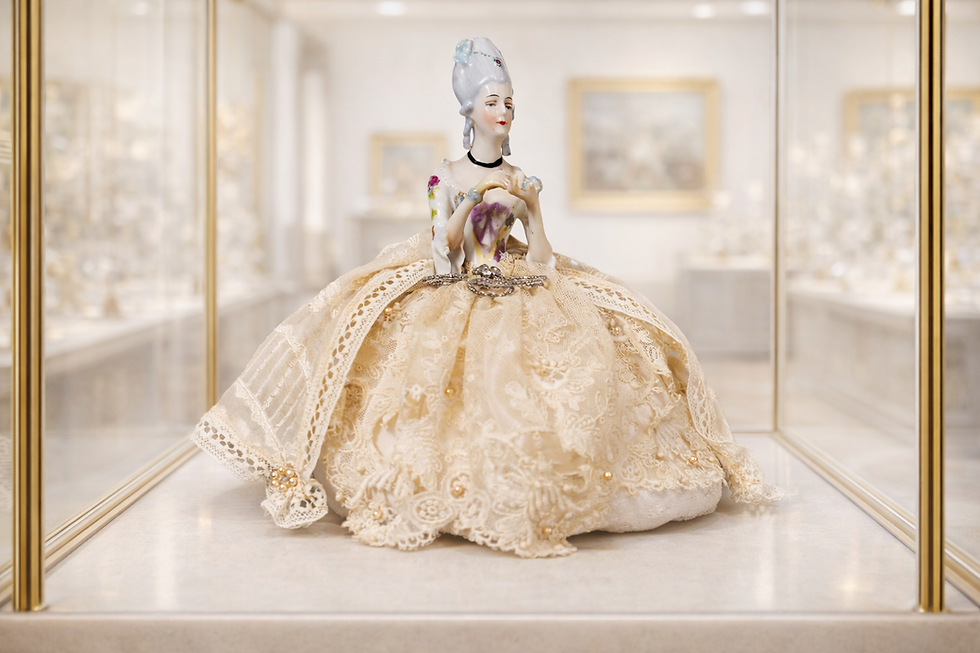
Porcelain Half Doll Pincushion
Porcelain, textile and lace
Germany, early 20th century
W.Goebel Porzellanfabrik
Collection of Pavillon du Collectionneur, Riga
HALF DOLLS
Miniature figurative sculpture
In the collection of Pavillon du Collectionneur, half dolls form one of the major areas of the museum’s collecting and research. Produced primarily in Germany, Austria and France in the late nineteenth and early twentieth century, these small figurative sculptures were often created as decorative elements for boudoir objects such as pincushions, powder boxes, dressing-table accessories and a variety of other decorative items.
Today half dolls are recognised as collectible objects of miniature figurative sculpture. Their identification often relies on the study of factory markings, stylistic characteristics and established models produced by different manufacturers.
These objects hold a unique place between miniature sculpture and the decorative culture of the boudoir.
Easter Egg Vase with Children
Bisquit porcelain
Germany, circa 1870-1880
Collection of Pavillon du Collectionneur, Riga
ART GLASS
ART GLASS

Light, colour and the artistry of glass
The art glass section of Pavillon du Collectionneur includes a selection of glass objects reflecting both artistic design and technical mastery. These works appear in a variety of forms created for different purposes — from tableware to perfume bottles, vases and other decorative objects.
The collection brings together examples produced in different regions and artistic centres, illustrating the diversity of glassmaking traditions and aesthetic approaches.
The art glass section of Pavillon du Collectionneur includes a selection of glass objects reflecting both artistic design and technical mastery. These works appear in a variety of forms created for different purposes — from tableware to perfume bottles, vases and other decorative objects.
The collection brings together examples produced in different regions and artistic centres, illustrating the diversity of glassmaking traditions and aesthetic approaches.
The design of the object reflects the flowing lines and stylised female imagery characteristic of the Art Nouveau aesthetic around 1900. Objects of this type combine artistic glassmaking with decorative metal mounts typical of the period.
Art Nouveau Decanter with Silver Mount
Glass, silver mount
Europe, circa 1900
Collection of Pavillon du Collectionneur, Riga